
01 / Section
Activity alone does not define a workflow
A person can open the same application for several unrelated reasons. Treating every visit as a workflow would produce noise, not understanding. Shadow starts with captured context but does not assume that every event belongs to a task.
The goal is to reconstruct an attempt at an outcome. Evidence that cannot support a clear task can remain available as activity without being forced into a workflow.
02 / Section
Capture preserves context in batches
A batch preserves one app or page context along with its screenshots and normalized activity. It is a practical evidence boundary: specific enough to inspect, but not yet a claim about the whole task.
Coverage information describes what collection could observe. It should never be mistaken for business activity or used to fill gaps with invented steps.
03 / Section
Grouping connects the task
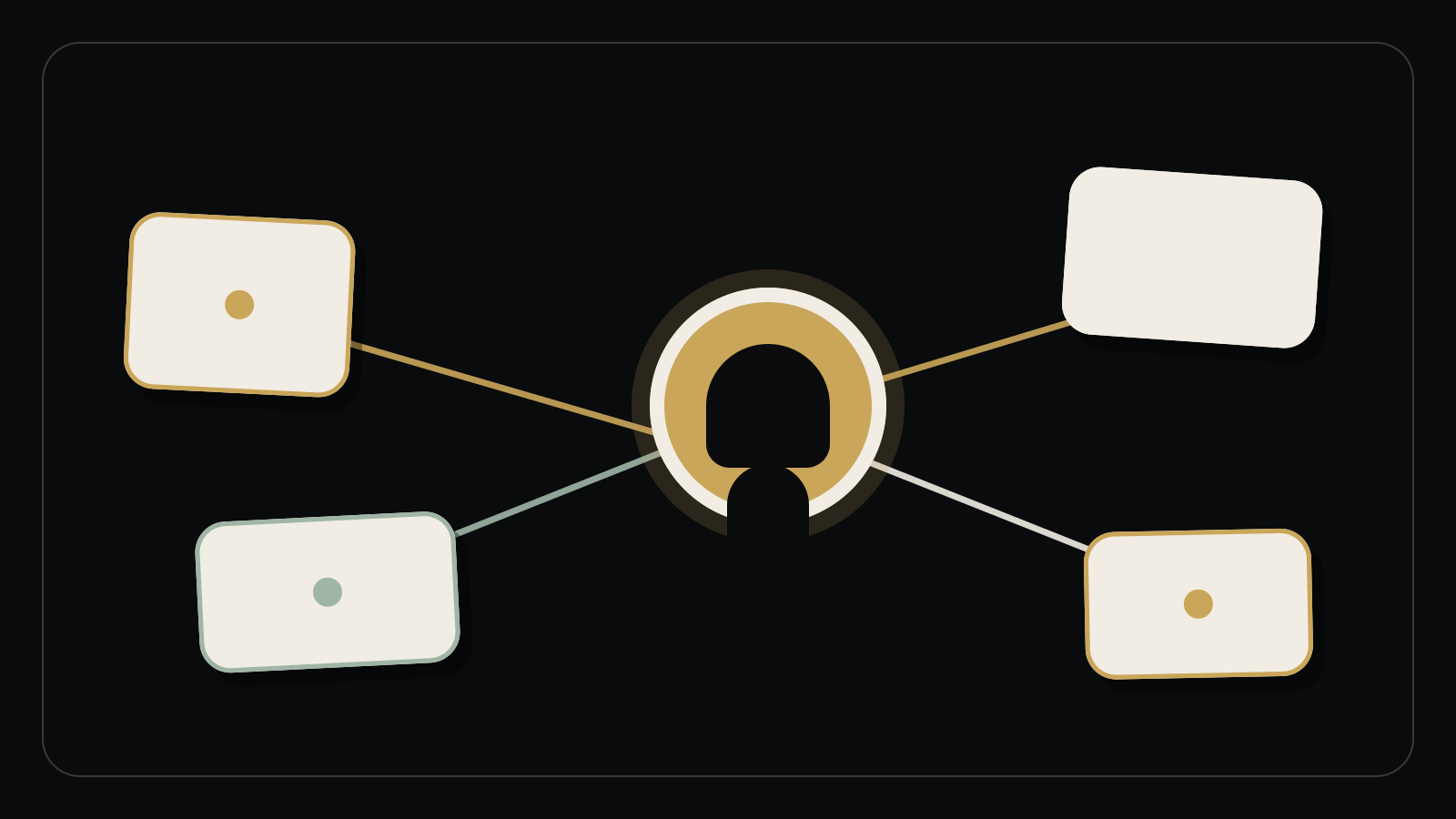
After batch analysis settles, Shadow examines the surrounding sequence and proposes which whole batches belong to the same outcome. Validated membership becomes the workflow: one attempt that may span pages, files, messages, and applications.
A batch is not split between workflows. Clear ownership keeps the evidence trail understandable and makes corrections possible when a grouping needs review.
04 / Section
Review the workflow and its sources
The workflow analysis explains what happened and links its claims to sources inside the same authenticated scope. Reviewers can move from the outcome to the sequence and then to the supporting context.
Each workflow describes one task attempt and provides a basis for comparing later attempts.